News
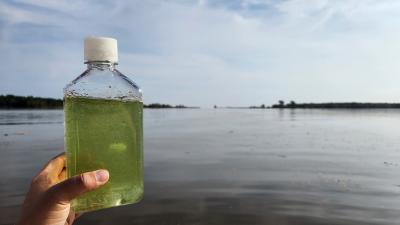
Estuaries across the United States are facing the same trends of warming water, algae growth, and declining oxygen concentrations that threaten water quality and fish populations, regardless of geographic location, according to new research led by a

Researchers at Rensselaer Polytechnic Institute (RPI) have found that today's leading artificial intelligence tools for predicting protein structures routinely generate results that are physically and chemically impossible, exposing critical blind sp
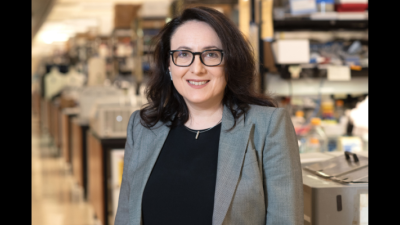
Rensselaer Polytechnic Institute (RPI) has appointed globally renowned neuroscientist Katerina Akassoglou, Ph.D., as the Tissue Engineering and Regenerative Medicine Constellation Chair in the Center for Engineering and Precision Medicine (CEPM)
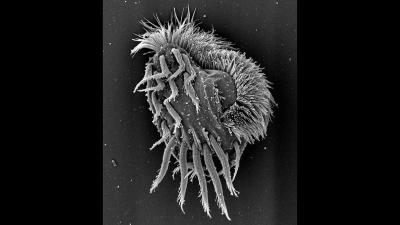
Researchers at Rensselaer Polytechnic Institute (RPI) have discovered a microscopic organism that can transform into a cannibalistic "supergiant" that drastically changes size, shape, and behavior, and abandons filter-feeding to hunt and consume thei

Jayashree Balaraman grew up in East Brunswick, New Jersey, the kind of student who loved biology and taught herself to code in high school because she was already beginning to sense that the two disciplines belonged together.

Many disease-causing bacteria — including pathogens that can cause cholera, meningitis, and certain types of pneumonia — contain an enzyme called Na⁺-NQR.
A team of researchers at RPI, in collaboration with the University of South Florida, University of North Carolina, and The Neural Stem Cell Institute, have made a discovery that opens the door to new treatments for Alzheimer’s disease and other brain
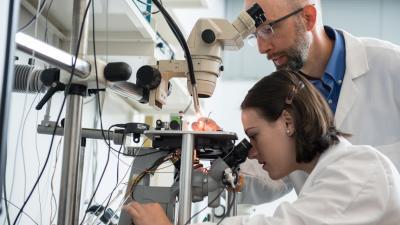
RPI Biology Professor Doug Swank, Ph.D., was recently awarded the prestigious Marion J. Siegman Lectureship Award from the American Physiological Society.

When you're running up stairs or out on a jog, your muscles eventually start to feel heavy and weak. That's fatigue setting in, a sign that the muscles’ energy reserves are becoming depleted.
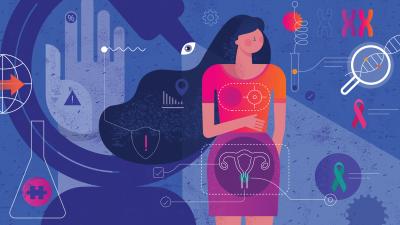
The Multi-Organ Approach to Address Diseases Following Estrogen Loss (MODEL) program aims to map the entire biological landscape of menopause
