We emphasize modern molecular and cellular-level biology, providing a strong background in quantitative, physical, and chemical biology.
We study life.
This vast field examines the structure, function, growth, origin, evolution, and distribution of living things. At Rensselaer, we emphasize modern techniques and interdisciplinary learning. Students obtain knowledge in a diverse range of biological sub-disciplines, including molecular and cellular-level biology or ecology and evolution. Together, the curriculum provides a strong background in quantitative, physical, and chemical biology.
Many biology majors pursue careers in the health professions (medical, dental, vision, veterinary), while others plan for careers in ecological or environmental fields. Many pursue graduate school and conduct biological research. And still others plan for careers that will relate to biology, such as management or law.
Program of Study
Our program trains students in analytical problem-solving skills using cutting-edge research approaches and technologies.
As a result of completing this program students will:
- Scientific Process: Be able to properly describe and apply the process of science, use the scientific method to answer biological questions including the ability to find and comprehend scientific literature, develop testable hypotheses, design and conduct experiments, and collect, analyze, and present scientific data.
- Quantitative Reasoning: Be able to process, analyze, and visualize data to draw correct conclusions while using appropriate statistical methods.
- Models and Simulations: Be able to understand and apply scientific models or simulations including both statistical models and system-level models or simulations.
- Interdisciplinary: Be able to apply knowledge and skills from across the curriculum to current problems in biological sciences to generate integrative papers, proposals, or other types of projects.
- Communication and Collaboration: Be able to communicate effectively on scientific topics in written and oral formats. Be able to collaborate with peers and work together to achieve a common goal.
- Science and Society: Be able to recognize and discuss ethical issues in biology and develop an understanding of how science impacts our society.
While rigorous, the undergraduate curriculum (128-Credits) offers sufficient flexibility and course choices to allow you to tailor your education.
Research is an important component of the B.S. in Biology. Our program introduces you to biological research in basic and advanced laboratory courses, and most students pursue independent research in a faculty laboratory or through an internship or co-op during their Arch Away Semester.
Rensselaer students can minor in just about any degree area offered on campus. Minors of particular interest to those majoring in Biology include:
The Biological Sciences faculty provide a variety of research opportunities for undergraduate and graduate students enrolled in our degree programs. Students who are interested in pursuing research themselves or learning more about what faculty members in our department should consult the Biological Sciences Research page.
Academic Opportunities
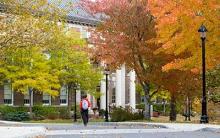
Student researchers play a critical role in the world-changing discovery, innovation, and breakthroughs taking place across campus.
Tri-Beta Biological Honor Society is for undergraduate students dedicated to improving the understanding and appreciation of biological study, and extending the boundaries of human knowledge through scientific research.
Alpha Epsilon Delta is the National Health Preprofessional Honor Society dedicated to the encouragement and recognition of excellence in preprofessional health scholarship.
